
How does UT hatch tightness testing work? A step-by-step guide
UT (ultrasonic) hatch tightness testing checks whether a ship’s hatch covers are watertight. An ultrasonic transmitter is placed inside the closed cargo hold, and a surveyor uses a handheld receiver to ‘listen’ along the hatch seals from outside. If ultrasound escapes, so could water. The strength of the signal shows how big the gap is – and exactly where it is.
New to the equipment itself? Start with what is an ultrasonic hatch cover tester?
Why test hatch covers at all?
Water getting in through leaking hatch covers is one of the main causes of cargo damage at sea. When cargo is damaged, it often leads to large claims against owners, insurers and P&I clubs.
Regular tightness testing helps ship owners, managers and surveyors find worn or damaged seals before they cause a problem. It’s also a key part of pre-loading surveys and condition surveys.

What is ultrasonic testing, in plain terms?
Ultrasound is sound at a frequency too high for people to hear. It travels through air, and it will pass through any gap that air can get through – even a very small one.
A solid, properly sealed hatch cover blocks the sound. A damaged or poorly compressed seal lets some of it out. By measuring the sound that escapes, a surveyor can find leaks without using any water at all.
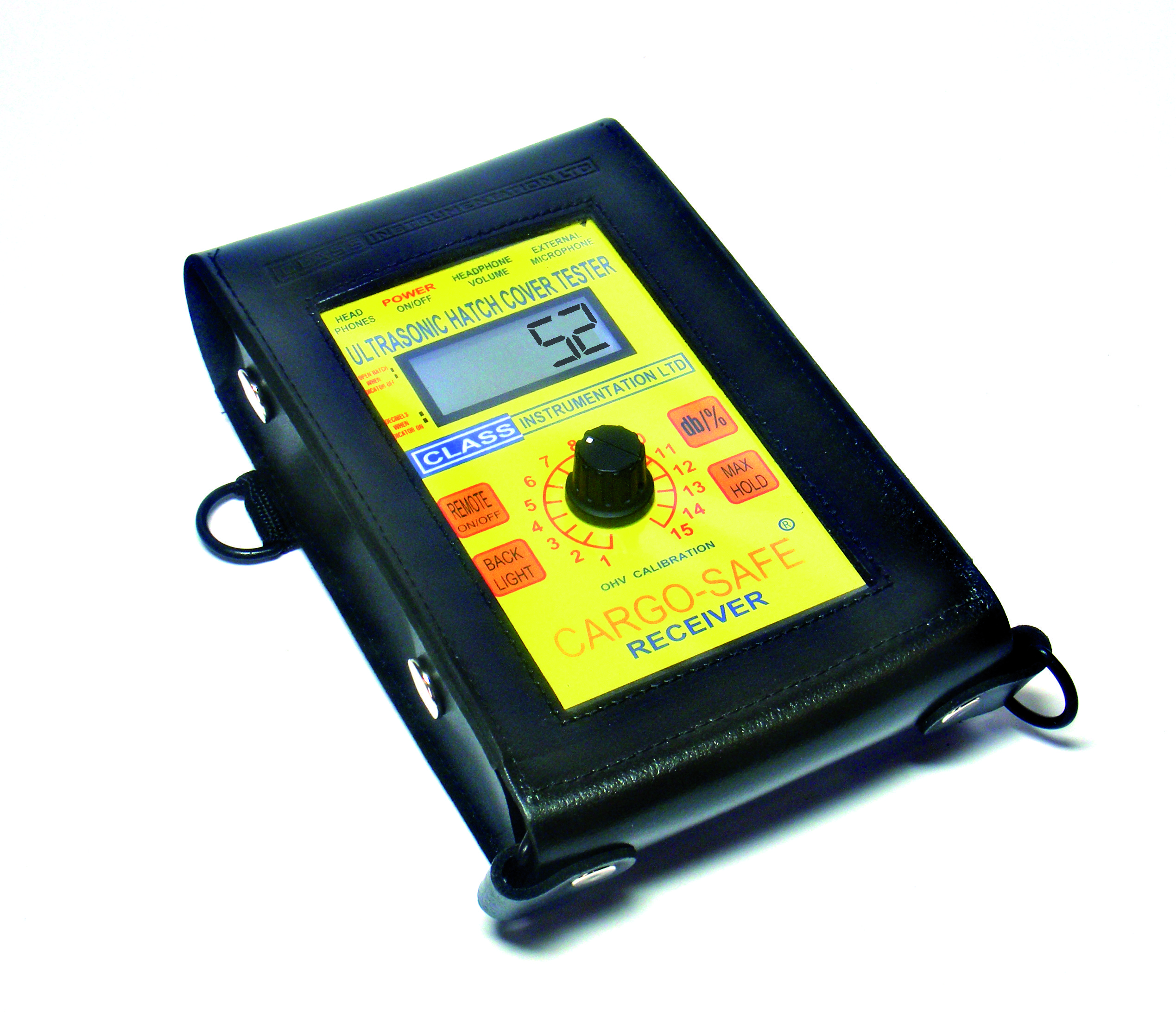
What equipment do you need?
A typical ultrasonic hatch cover testing kit includes:
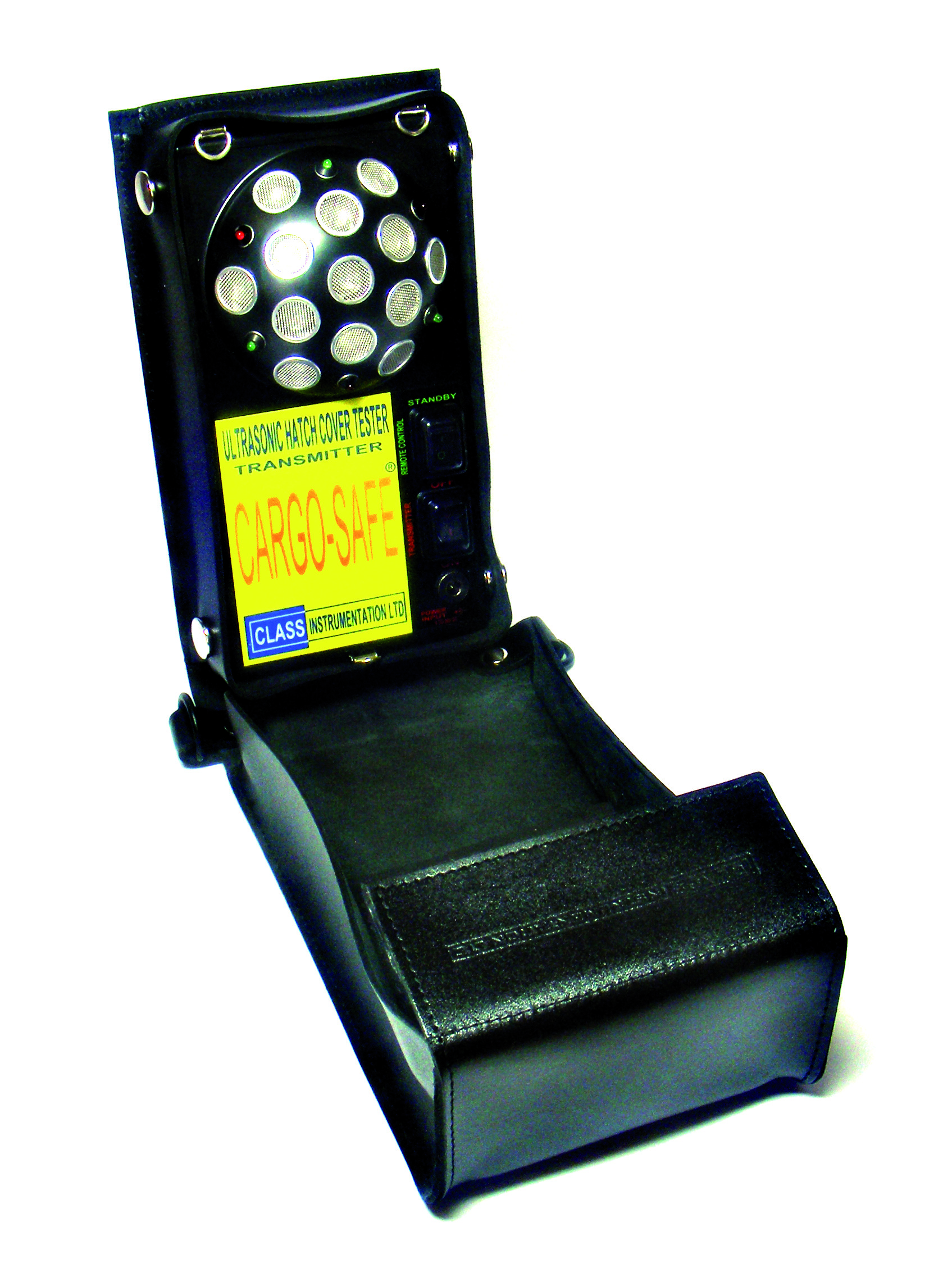
- A transmitter – placed inside the hold, it fills the space with a steady ultrasonic signal
- A receiver – the handheld unit the surveyor uses on deck, showing a reading on screen
- A flexible microphone and extension arm – to reach along seals and into awkward corners
- Headphones – so the surveyor can hear the leak as well as see the reading
- A test device – to check the transmitter, microphone and extension arm are working before each survey
Step-by-step: how is a UT hatch test carried out?
- Check the kit. Before the survey, the transmitter, microphone and extension arm are checked to make sure everything is working correctly.
- Place the transmitter in the hold. The hold can be empty or already loaded with cargo.
- Close and secure the hatch covers. The covers should be in their normal sea-going condition, fully closed and cleated.
- Take a reference reading. A reading is taken with the hatch open, known as the Open Hatch Value (OHV). This gives a benchmark to compare leaks against.
- Scan the seals. On deck, the surveyor moves the microphone slowly along every seal, joint and cross-joint, listening through headphones and watching the display.
- Find and measure leaks. Where ultrasound escapes, the reading rises. The higher the reading, the bigger the gap. The leak can be pinpointed to a precise spot.
- Record the results. Readings are noted in decibels (dB) or as a percentage of the Open Hatch Value, so the results can be reported and repaired.

How are the readings interpreted?
Readings can be shown in two ways. Decibels (dB) give the raw strength of the escaping signal. A percentage of the Open Hatch Value (OHV) compares each leak against a fully open hatch, which makes results easier to compare between holds and ships.
In both cases, the principle is simple: a stronger signal means a bigger gap and a more serious leak.
Why choose ultrasonic testing over a hose test?
The traditional hose test sprays water at the hatch seals and checks for water getting through. It works, but it has drawbacks. Ultrasonic testing:
- uses no water, so there’s no run-off into the port or harbour
- can be carried out with cargo already in the hold
- works in sub-zero temperatures, when hose testing isn’t practical
- pinpoints the exact location and relative size of each leak
- doesn’t get in the way of other work on board
For a fuller comparison, see ultrasonic vs hose testing: which hatch cover leak test is best?
How do you choose a UT hatch testing device?
When choosing ultrasonic hatch testing equipment, surveyors usually look for:
- Type approval from a recognised classification society, such as ABS
- Compliance with IACS UR Z17, which covers firms carrying out tightness testing of hatch covers
- A powerful transmitter that can fill even the largest holds
- Rugged, weatherproof construction for use on deck in all conditions
- Long-term calibration and technical support
CARGO-SAFE™, designed and made in Britain by Class Instrumentation, is ABS Type Approved and complies with IACS UR Z17. Its 157 dB transmitter is suitable for any size of ship, and its units are protected to IP66.